
TL;DR:
- Many school leaders overlook the importance of modernising their digital presence, risking fragmented communication and inequity. Updating existing websites, consolidating channels, and improving infrastructure can significantly enhance engagement and operational efficiency. A phased, deliberate approach focusing on content, connectivity, and verified reach helps schools build trust and inclusivity without costly rebuilds.
Your school’s website and communication tools are often the first point of contact for prospective families, Ofsted inspectors, and the wider community. Yet many school leaders still treat their online presence as an afterthought, assuming that a refresh means expensive new systems or a complete rebuild. The real question of why modernise school online presence has a more practical answer: because fragmented, outdated digital channels are actively working against your school’s ability to communicate, engage families, and support every learner fairly. This guide will help you understand what modernisation actually involves, why it matters right now, and how to start with confidence.
Table of Contents
- Key takeaways
- Why modernise school online presence now
- What modernisation actually means
- The real benefits of updating your digital presence
- Challenges to anticipate
- How to start modernising effectively
- My honest view on why modernisation often stalls
- How Eschools can help your school move forward
- FAQ
Key takeaways
| Point | Details |
|---|---|
| Modernisation is not a rebuild | Updating your school’s digital presence means layering improvements onto existing systems, not scrapping them. |
| Connectivity is an equity issue | Poor on-campus internet access directly limits student engagement and widens the attainment gap. |
| Verified reach comes first | Engagement metrics mean nothing if families are not reliably receiving your communications. |
| Content refresh beats fragmentation | Consolidating and updating existing digital assets delivers faster visibility gains than launching new pages. |
| Gradual progress sustains stability | Intentional, phased improvements protect your school’s operational continuity and staff confidence. |
Why modernise school online presence now
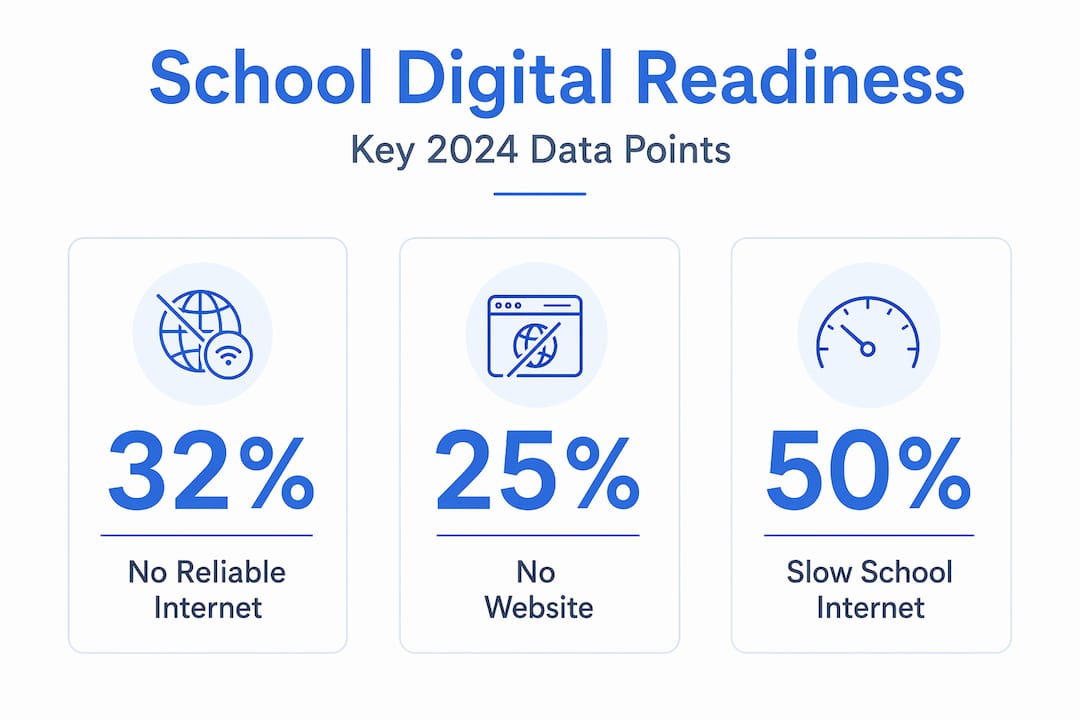
The urgency is real, and the data reflects it. 32% of primary schools worldwide lack reliable internet access, and 25% of low-income families are under-connected, relying on mobile-only devices or no service at all. For UK schools, this means a significant portion of your families may only be reachable through a well-optimised, mobile-friendly website and a single, reliable communication channel.
The digital divide is not only a home problem. Over 50% of secondary students cite slow or inconsistent school internet as their primary obstacle to using instructional technology in the classroom. The root cause is rarely the broadband provider. More often, it is the school’s internal network infrastructure. Structured cabling, high-density Wi-Fi coverage, and resilient access point placement are the invisible foundations that either enable or obstruct every digital initiative your school attempts.
When your online presence is outdated or fragmented, it compounds these challenges. Families who can only access school information via a smartphone deserve a website that loads quickly, displays clearly on a small screen, and delivers the information they need without three clicks through broken navigation. Schools that address this are not simply ticking a digital box. They are actively closing the access gap.
Consider what this means in practice:
- Families without desktop computers rely entirely on mobile-optimised content for updates, letters, and event information.
- Students with limited home connectivity depend on well-organised school platforms to access resources during the school day.
- On-campus connectivity must be treated as a critical equity tool, not a convenience upgrade.
- Poor digital infrastructure signals to prospective families that the school is not invested in modern learning environments.
The importance of school digital identity extends well beyond appearances. It reflects the operational maturity and community commitment of your leadership team.
What modernisation actually means
Here is where many school leaders become stuck. Modernising your school’s online presence does not mean discarding your current website platform, rebuilding your communication systems from scratch, or hiring a digital marketing agency. It means making deliberate, structured improvements that align your digital assets with how families, students, and staff actually behave online today.
The three core components of genuine modernisation are content, communication, and technology integration.
Content: A content refresh strategy focused on structured, authoritative, and recently updated material yields faster search visibility gains than launching fragmented new pages. AI-driven search engines now prioritise consolidated digital assets. For schools, this means auditing existing web pages, updating key information, consolidating duplicated content, and ensuring every page reflects your current offer. You do not need more pages. You need better ones.
Communication: Fragmented channels are a persistent problem in schools. When parents receive messages via email, a separate app, letters sent home, and social media posts, they quickly learn to ignore all of them. A unified communication system prevents this fragmentation and measurably improves family engagement. The metric that matters most is not open rates or click-throughs. It is verified reach: can you confirm that a specific message reached a specific family through a confirmed, current contact?
Technology integration: Meaningful IT progress in schools is built on layering new capabilities onto trusted, stable foundations. You do not need to replace your management information system or rebuild your intranet. You need digital tools that sit alongside what you already have, reducing friction rather than adding complexity.
Pro Tip: Before committing to any new platform or tool, audit your current digital assets first. List every channel families use to contact you, every platform staff use to share information, and every place your school appears online. You will likely find significant duplication and several gaps that a focused refresh can resolve without major expenditure.
The real benefits of updating your digital presence
The benefits of online school presence modernisation are felt across three distinct areas: engagement, communication clarity, and operational efficiency.
Stronger engagement with families and students
When your website is current, accessible, and easy to navigate, families engage with it. They check term dates, read newsletters, view gallery updates, and feel connected to school life. This is not a soft benefit. Schools with strong digital engagement report fewer missed appointment slots, higher attendance at parents’ evenings, and more consistent response rates to surveys and consent forms.
A modern communication system that fits naturally into the school day rhythm becomes trusted by staff. When staff trust the tools, they use them consistently. Consistent use produces reliable data. Reliable data enables leadership to make better decisions about where communication is working and where it is not.
Clearer, more equitable communication
Here is the practical sequence for getting communication right:
- Establish verified contact details for every family, including mobile numbers and email addresses that are confirmed as current.
- Consolidate your channels to one primary platform for routine communications, keeping specialist tools for specific functions such as parent evening booking.
- Design for mobile first, recognising that the majority of families will read school communications on a smartphone.
- Audit accessibility to confirm that your website meets the Public Sector Bodies Accessibility Regulations, which is a statutory requirement for UK schools. You can review what this involves through the school website accessibility guide published by Eschools.
- Track reach, not just sends. A message delivered to an outdated email address has not reached anyone.
Pro Tip: The single most underused feature in school communication platforms is read receipts linked to verified contact records. If your system cannot tell you which specific families have not received or opened a critical message, it cannot help you close that gap proactively.
Reduced operational friction
Fragmented digital tools create invisible workload. When your school website design is built around clear information architecture, staff spend less time answering phone calls about term dates, uniform policies, and admissions procedures. Families find answers independently, which frees your office team for more complex tasks.
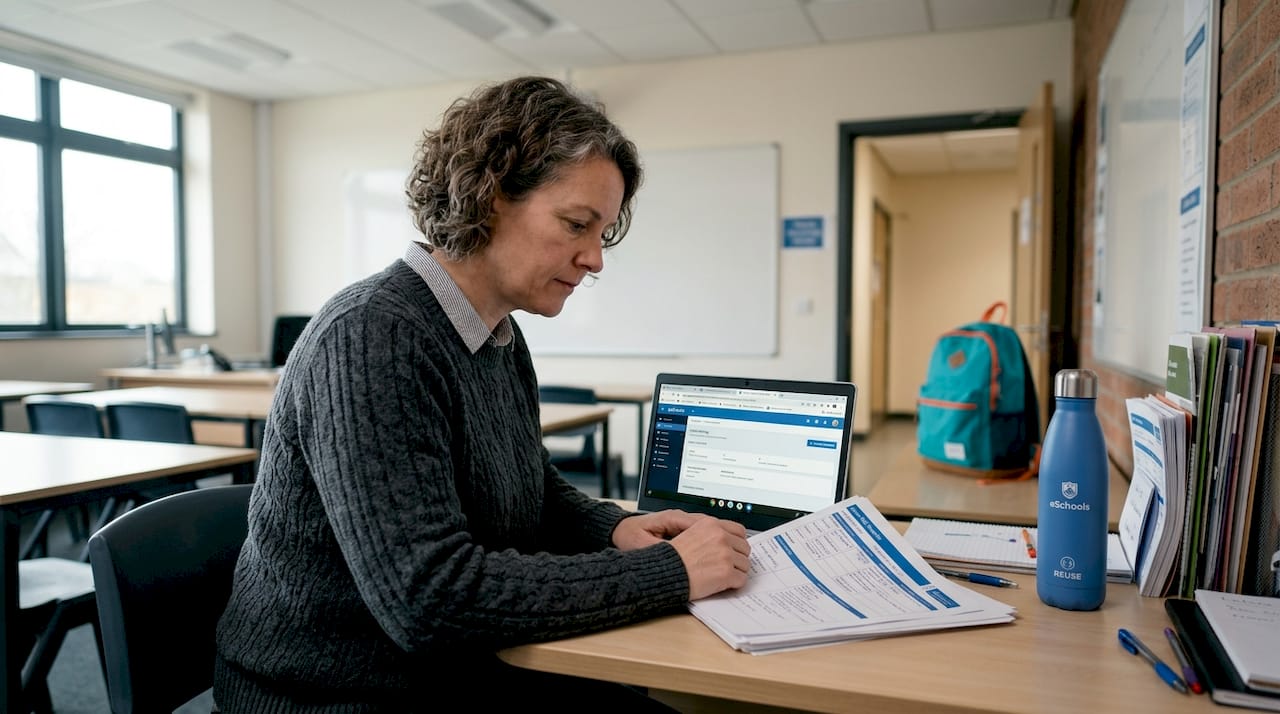
The impact of digital marketing on schools, when executed thoughtfully, also extends to admissions. A well-maintained, compelling online presence is increasingly the deciding factor for parents choosing between schools of similar academic reputation.
Challenges to anticipate
Modernisation rarely fails because of technology. It fails because of pace and scope. Leaders who attempt to change too much at once destabilise their teams, confuse families, and create the very fragmentation they were trying to resolve.
The table below illustrates the difference between approaches that work and those that create more problems than they solve.
| Approach | What tends to happen |
|---|---|
| Phased, layered improvements | Staff adapt gradually, families experience consistent messaging, operational stability is maintained |
| Simultaneous platform replacement | Staff overwhelm, mixed messages to families, data migration errors, loss of historical records |
| Visual refresh without content audit | Improved first impressions but persistent navigation problems and outdated information |
| New tools without verified contact data | High send volumes, low actual reach, misleading engagement statistics |
The digital divide also has three distinct layers that each require a different response:
- The access divide: Families without reliable devices or internet connectivity. Addressed through mobile-optimised design and offline-capable communication alternatives.
- The design divide: Platforms that are technically accessible but difficult to use. Addressed through user testing with real parents and plain-language content.
- The use divide: Families who have access and tools but lack confidence or trust in digital communications. Addressed through relationship-building and consistent, relevant messaging that earns attention over time.
Digital resilience planning, including backup connectivity and offline capabilities for core cloud services, also deserves a place in your IT strategy. Schools that plan for outages maintain learning and administrative continuity when disruptions occur.
How to start modernising effectively
You do not need a large budget or a specialist team to begin. You need a clear sequence.
- Audit your current digital assets. List every platform, channel, and tool used by staff, students, and families. Identify duplication, gaps, and anything that has not been updated in the past 12 months.
- Prioritise your website content refresh. Update statutory pages first, then focus on the pages most visited by prospective families. AI-driven content optimisation rewards consolidated, authoritative pages over frequent new additions.
- Select one unified communication platform and commit to it. Agree internal protocols for what goes through which channel and retire redundant alternatives.
- Invest in network infrastructure before adding new digital learning tools. Structured cabling and high-density Wi-Fi are the foundations that everything else depends upon.
- Engage your stakeholders early. Consult staff, parent representatives, and your IT coordinator before implementing changes. Their practical knowledge of current frustrations will shape a far better solution than any top-down decision.
For more practical guidance on strengthening your school’s digital engagement, the digital engagement tips from Eschools offer a useful starting point.
Pro Tip: Set a 90-day review point after any significant digital change. Measure verified family reach, staff platform adoption, and website traffic to statutory pages. These three metrics will tell you whether modernisation is working before you commit to the next phase.
My honest view on why modernisation often stalls
In my experience working with school leaders, the most common reason modernisation stalls is not resistance to change. It is the belief that change has to be total to be worth doing. I have seen schools delay a needed website refresh for two years because they were waiting to find budget for a complete rebuild, when a focused content audit and a few structural changes would have delivered most of the benefit at a fraction of the cost.
What I have also learned is that verified family reach is the most overlooked metric in school communication. Leaders will invest in sophisticated engagement platforms and then measure success by the number of messages sent. Sending is not reaching. I would rather a school have 95% verified contact coverage on a simple, single channel than 60% coverage spread across four platforms with impressive dashboards.
Digital equity must sit at the centre of any modernisation plan. If your improvements only benefit families with high digital literacy and fast home broadband, you have made your school’s communication less equitable, not more. The families hardest to reach digitally are often those most in need of consistent contact with your school.
Finally, stakeholder engagement is not a consultation exercise you run at the start and forget. The schools I have seen succeed with digital modernisation keep staff and parent representatives involved throughout, adjusting as they go. That is what builds lasting confidence in new systems.
— Ed
How Eschools can help your school move forward
If you recognise the challenges described in this article, Eschools has the tools and experience to help you address them practically. With over 14 years of working with UK schools and multi-academy trusts, Eschools designs bespoke school websites that meet statutory compliance requirements, load reliably on mobile devices, and present your school clearly to prospective families. Their communication tools are built around verified reach and ease of use for staff, not feature complexity for its own sake. You can explore how other schools have approached modernisation through the Eschools case studies and find a solution that fits your school’s current stage and budget.
FAQ
What does it mean to modernise a school’s online presence?
Modernising a school’s online presence means updating your website content, consolidating communication channels, and upgrading digital infrastructure in a phased, deliberate way. It does not require replacing all existing systems.
Why is verified family reach more important than engagement statistics?
Engagement metrics such as open rates are only meaningful if messages are confirmed as reaching the right people. Verified contact coverage must be established before engagement data can be trusted.
How does poor on-campus Wi-Fi affect school digital modernisation?
Slow or inconsistent school internet is the top obstacle students report when using instructional technology. Infrastructure investment should precede the introduction of new digital learning tools.
What are the first steps to update a school’s digital presence?
Start with an audit of all current digital assets and communication channels, then prioritise updating statutory website content before introducing new platforms or tools.
How does modernising a school website support digital inclusion?
A mobile-optimised, accessible website with plain-language content and a single reliable communication channel helps reach families who are under-connected or have lower digital confidence, directly addressing the design and use divide that many schools overlook.